Online Business Basics 101: What You Need (& Don’t Need) to Start
This article may contain affiliate links, which means we may earn a small commission at no additional cost to you. See our Disclaimer to learn more.
Starting an online business can feel complicated before you’ve even begun. Websites, email lists, social media, business plans, logos, software – the list of things you could spend time and money on is almost endless.
But here’s the good news: you probably need far less than you think.
The first step isn’t buying a domain name or choosing a website theme. It’s figuring out what kind of online business you want to build, who you want to help, and how that business could eventually make money.
Once you know those things, it becomes much easier to decide what you actually need – and what can wait.
Key Takeaways: Online Business Basics
- Start with a business model, not a collection of tools.
- Know who you want to help and what you can offer them.
- You don’t necessarily need a website to start an online business.
- Expect to learn as you go. You do not need to know everything before you begin.
- Give yourself time. Building a real business is very different from chasing quick money online.
What You Actually Need To Start An Online Business
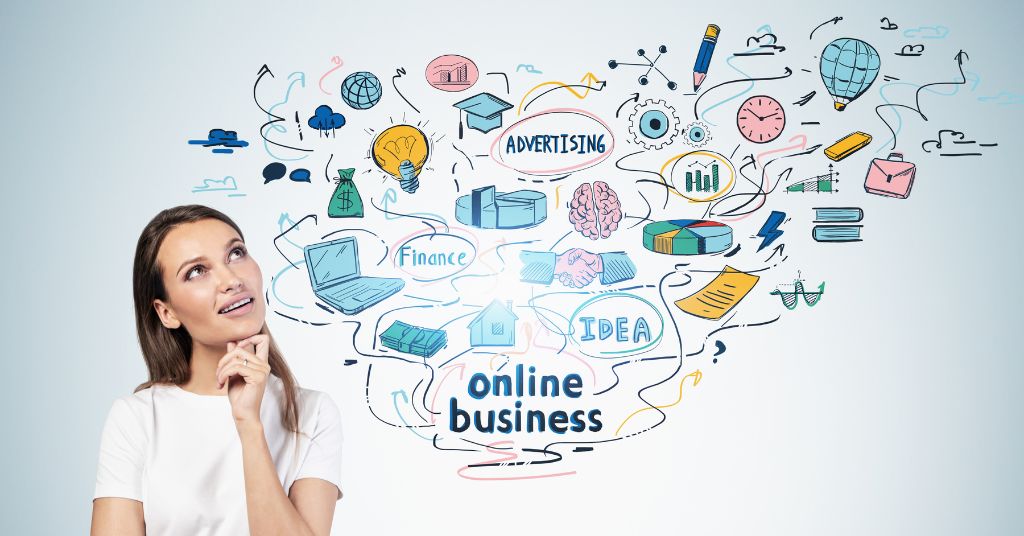
There isn’t one universal checklist because an “online business” can mean many different things.
You could offer a freelance service, build a content website, use affiliate marketing, sell a digital product, create content for an audience, or combine several of those things over time.
I’ve spent years building content websites and using affiliate marketing, so that’s the online business model I know best. But it isn’t the only way to build a business online – and it may not be the right starting point for everyone.
Before worrying about tools and technology, I’d concentrate on these basics.
1. A Business Model
Start by answering a very simple question: How could this business eventually make money?
You don’t need every detail figured out. You should, however, have some idea of the model you’re considering. For example, you might:
- Provide a service to clients.
- Earn commissions by recommending products or services through affiliate marketing.
- Create and sell digital products.
- Build an audience and monetize your content.
- Sell your own products.
- Combine more than one income stream.
If you aren’t sure yet, that’s okay. Exploring your options is part of starting.
What I wouldn’t do is begin buying tools, courses and subscriptions before you have some idea what you’re trying to build.
2. Someone You Want to Help
You’ll often hear marketers talk about identifying a “customer avatar.” That can make this step sound far more complicated than it needs to be.
Really, you’re trying to answer: Who am I creating this business for, and what do they need help with?
You don’t have to create an imaginary person with a name, favorite breakfast cereal and 14-page biography. But you should understand the person you’re trying to reach.
If you’re starting a bookkeeping service, for example, your audience might be small-business owners who don’t want to manage their own books.
If you’re building a travel website, you might help independent travelers plan European vacations.
If you’re creating a website about gardening, perhaps you’re helping beginning gardeners grow vegetables in small spaces.
Your audience may evolve as your business grows. Mine certainly has on different websites. That’s normal.
3. Something Useful to Offer
A business needs to provide value in some way. That doesn’t necessarily mean you need a product to sell.
Your “offer” could be your expertise as a freelancer. It could be useful information. It could be recommendations that help someone make a purchasing decision. Eventually, it could be a course, printable, membership or other digital product.
Ask yourself: Why would someone spend their time – or eventually their money – with my business?
That’s a much more important question at the beginning than what your logo looks like.
4. A Way to Reach People
Even a terrific business idea can’t do much if nobody knows it exists.
How you reach people will depend on the business you’re building. Possibilities include:
- Search engines
- Social media
- Referrals and networking
- Online communities
- Video or podcasts
- Paid advertising
You don’t need to use all of them. In fact, trying to be everywhere at once is an excellent way to make yourself crazy. Choose a method that makes sense for you and your business and start there.
5. A Simple Setup That Fits Your Business
This is where domains, websites, email services and other tools finally enter the picture.
But your business model should determine your tools – not the other way around.
If you’re starting a freelance service, you may be able to find your first clients through referrals, LinkedIn or a freelance platform before building a full website.
If you’re creating content primarily on YouTube or another platform, your initial setup will look different again.
If you’re building an affiliate or content website – the model I’ve used extensively – then yes, I’d generally expect a domain name, hosting and a website to be part of the foundation.
The important thing is to buy what your business needs rather than somebody else’s list of “must-have” online business tools.
6. A Willingness to Learn
This one you really do need.
I started my first business long before anyone was talking about online businesses, affiliate marketing or social media. Every new stage has required learning something I didn’t know before.
That’s still true.
You don’t have to be a technology expert. You don’t have to understand every marketing strategy. And you certainly don’t have to have all the answers before you start. You just need to be willing to learn the next thing you need.
7. Patience and Persistence
This may be the least exciting item on the list, but it’s probably one of the most important.
An online business isn’t automatically a fast business simply because it exists on the internet.
Some business models can generate revenue faster than others. A freelancer who lands a client may earn money relatively quickly, while a content website can take considerable time to build an audience and traffic.
There is no universal timeline. That’s why I’m wary of promises suggesting that everyone can follow the same formula and reach a particular income level within a particular number of weeks or months.
Build something useful. Learn. Adjust. Keep going.
What You Don’t Need Right Away
This list might be even more important. There are plenty of things you may eventually want. That doesn’t make them Day One necessities.
A Fancy Logo
I once wasted about a week fussing over pretty logos. Don’t be me.
Your first logo – or lack of one – is almost certainly not going to determine whether your business succeeds. Get the important things working first. You can make it pretty later.
Expensive Software
There’s a tool for practically everything now, and many of them sound indispensable when you’re starting out.
They’re not. Use free or inexpensive options where they make sense, and add paid tools when you can identify a specific problem they’ll solve.
A Huge Social Media Presence
You don’t need thousands of followers before you’re “allowed” to start a business.
You don’t even necessarily need to be active on every major social platform. One useful platform where you can consistently connect with the right people is far better than five neglected accounts.
Paid Advertising
There are businesses for which paid advertising makes sense very early.
But it isn’t a universal requirement for starting an online business, and I certainly wouldn’t spend money on ads simply because someone told me that’s what “real businesses” do.
A Perfect Business Plan
You need direction. You don’t need to predict the next ten years.
Your ideas may change once real people begin interacting with your business. That’s not failure. That’s information.
Every Answer
You won’t have them. I don’t either.
And after decades in business, I can tell you that figuring things out as you go isn’t something that ends once you’re “experienced.” It’s part of running a business.
How Much Does It Cost to Start an Online Business?
It depends enormously on the business model.
A service business may be started very inexpensively if you already have the skills and equipment you need. A content website may require a domain and hosting. Other models may require software, inventory, training or specialized tools.
Instead of asking, “What does an online business cost?”, I think the better question is: “What is the least I need to spend to test whether this particular business idea has potential?”
Start lean. You can always spend more later.
Do You Need a Website to Start an Online Business?
No – not every online business requires a website on Day One.
I happen to be a big believer in owning your own website, particularly for content and affiliate businesses. A website gives you an online home that isn’t completely dependent on a social media platform or marketplace.
But there’s an important difference between “a website may be a valuable business asset” and “you can’t start without one.”
Depending on your business model, you may be able to start elsewhere and build your website later.
Frequently Asked Questions About Online Business Basics
Do I need a business license to start a blog?
Usually not for starting a blog/affiliate site, but you must check your own local laws.
What is the simplest online business I can start?
There isn’t one easiest online business for everyone.
A service business can be relatively simple to start if you already have a marketable skill. Affiliate marketing can have relatively low startup costs but usually requires time to build traffic or an audience. Content creation is easy to begin but much harder to turn into consistent income.
I’d choose based on your skills, interests, available time and how you hope to make money – not simply on which opportunity sounds easiest
Can I start an online business while working fulltime?
Absolutely. Many people start with a few hours each week while keeping their regular job or running another business. The tradeoff is that growth may be slower – and that’s perfectly reasonable.
I’d rather build something steadily around real-life responsibilities than create an unrealistic schedule you can’t maintain.
Do I need tech skills?
You need enough technology skills for the business model you choose, but that doesn’t mean you need to be very “techy”.
Today’s tools make many tasks far easier than they once were, and you can learn individual skills as you need them.
Don’t let “I’m not techy” automatically convince you that you can’t build something online.
How long before I see results?
There isn’t an honest one-size-fits-all answer. It depends on the business model, your experience, the amount of time you have available, how you find customers or an audience, and many other factors.
Someone selling a service can potentially earn money with a first client. A website relying on search traffic may take much longer.
Be skeptical of anyone promising you a guaranteed timeline.
What’s the biggest mistake beginners can make?
Trying to build everything at once. It’s easy to spend weeks choosing tools, designing logos, opening social accounts, watching training videos and researching business ideas – and still never actually put anything into the world. Pick a direction. Build the simplest workable version. Learn from what happens next.
Build the Right Foundation for Your Online Business
You don’t need a massive budget, a pile of expensive software, or a perfect ten-year plan to start an online business.
But that doesn’t mean you shouldn’t invest in your business. The right tools, training, and resources can save you time, help you learn faster, and make running your business considerably easier.
The key is knowing what you’re building, who it’s for, how it could make money, and how you’ll reach people. Once you know that, you can make much smarter decisions about what is worth paying for.
If you’re still deciding what kind of online business might suit you, that’s a perfectly good place to be. Explore the possibilities, choose a direction, and then invest in the things that will actually help you build it.
And yes, eventually you can fuss with the logo. Just don’t spend a week on it like I did.
